Business License

Premium IGI Certified Lab-Grown Diamonds: 1.00ct – 3.00ct | D Color | VS1 Clarity | Fancy Shapes
Carat Weight Strategy: From 1.00ct to 3.00ct
Whether you are designing a delicate, understated piece or a massive, red-carpet-worthy statement ring, our precise carat weight intervals provide the perfect canvas for your artistry.
1.00 Carat: The Classic Standard
The 1.00-carat diamond is the traditional benchmark for engagement rings worldwide. It offers substantial surface area and prominent finger coverage without feeling overly ostentatious. In fancy shapes like the Oval or Pear, a 1-carat stone often appears larger than a 1-carat round brilliant due to its elongated geometry. It is the perfect size for timeless solitaire settings or delicate diamond halos.
1.50 Carat: The Modern Favorite
Over the last decade, the 1.50-carat mark has become the new highly requested standard for modern brides. It provides a noticeable jump in visual size from the 1.00-carat, offering a distinctly luxurious feel. A 1.50ct Radiant or Cushion cut possesses immense presence on the hand and serves as a magnificent centerpiece for three-stone rings (flanked by tapered baguettes or trillion cuts).
2.00 Carat: The Statement Maker
Crossing the 2.00-carat threshold enters the territory of true luxury. Diamonds of this size are commanding and draw immediate attention across a room. A 2.00ct D-color diamond is a serious piece of fine jewelry. It is large enough to showcase the intricate faceting patterns of complex cuts (like the "crushed ice" look of a Radiant cut) perfectly. For custom jewelers, 2-carat stones are highly profitable centerpieces that elevate the entire value of a bespoke commission.
3.00 Carat: The Heirloom Masterpiece
A 3.00-carat D-color diamond is an extraordinary marvel of gemological science. In the mined diamond world, a stone of this size and quality would cost hundreds of thousands of dollars and be locked in a vault. Our lab-grown 3.00ct stones offer unparalleled, celebrity-tier glamour at an accessible luxury price point. A 3-carat Emerald cut or Oval cut offers massive finger coverage, transforming a simple platinum band into an heirloom-quality masterpiece.
The Gallery of Fancy Shapes: Architectural Brilliance
While the Round Brilliant is classic, Fancy Shapes represent the ultimate expression of personal style. Our D/VS1 collection specializes in these highly sought-after silhouettes. Every shape handles light differently, requiring masterful cutting techniques to unlock its full potential.
1. The Oval Cut
The Vibe: Elegant, finger-elongating, and highly trending.
The Optics: The Oval cut is a modified brilliant cut. It possesses the intense sparkle of a round diamond but stretches it into a flattering, elongated silhouette. Because of its larger surface area (table), an Oval diamond often looks physically larger than a Round diamond of the exact same carat weight.
Our Standard: We select Ovals with ideal length-to-width ratios (typically between 1.35 and 1.50) to ensure they are neither too wide nor too narrow. We also strictly vet for the "bow-tie effect"—a dark shadow that can appear across the center of poorly cut elongated stones. Our Ovals feature brilliant, even light distribution from tip to tip.
2. The Emerald Cut
The Vibe: Vintage, sophisticated, and architectural (Art Deco).
The Optics: Unlike brilliant cuts that maximize sparkle, the Emerald cut is a "step cut." It features long, linear facets arranged in parallel lines down the pavilion, resembling a descending staircase. Instead of fiery sparkle, the Emerald cut produces a "hall of mirrors" effect—broad, dramatic flashes of white light.
Our Standard: Because the Emerald cut’s large, open table acts like a window into the soul of the stone, high clarity is mandatory. Our VS1 standard ensures that no dark spots interrupt the icy, glassy depths of the diamond. We look for perfectly beveled corners to ensure secure prong setting.
3. The Radiant Cut
The Vibe: Bold, modern, and intensely sparkly.
The Optics: The Radiant cut is a spectacular hybrid. It combines the cropped-corner, rectangular silhouette of the Emerald cut with the complex, fiery faceting of the Round Brilliant. The result is a stone that often exhibits a mesmerizing "crushed ice" appearance.
Our Standard: The Radiant cut is famous for hiding inclusions well, meaning a VS1 Radiant will look utterly flawless. Furthermore, Radiant cuts retain more carat weight in their depth, giving them a very solid, substantial feel. Our Radiants are cut to maximize edge-to-edge fire.
4. The Pear Cut (Teardrop)
The Vibe: Romantic, unique, and asymmetrical.
The Optics: The Pear cut merges the Round Brilliant and the Marquise. It features a rounded bottom that tapers into a single, distinct point. This shape is incredibly flattering on the hand (when worn with the point facing the fingernails) and is also highly popular for dramatic pendant necklaces and drop earrings.
Our Standard: Symmetry is everything for a Pear cut. If the point does not align perfectly with the apex of the rounded end, the stone looks crooked. We only source Pear cuts with Excellent/Very Good symmetry, ensuring the shoulders curve gracefully and evenly.
5. The Cushion Cut
The Vibe: Antique romance meets modern brilliance.
The Optics: The Cushion cut (formerly known as the Old Mine cut) features a square or rectangular shape with softly rounded corners, resembling a pillow. It is known for its incredible fire (dispersion of rainbow light). There are two main styles: the "Chunky" antique style with broader flashes, and the "Crushed Ice" modern style with millions of tiny sparkles.
Our Standard: A D-color Cushion cut is a sight to behold. Because Cushions can sometimes retain color in their corners, having a strict D-color grade ensures the stone remains icy white throughout its entire volume.
6. The Princess Cut
The Vibe: Sharp, contemporary, and geometric.
The Optics: The Princess cut is a square modified brilliant. It features sharp, uncut corners and an intricate chevron faceting pattern on the pavilion. It is one of the most brilliant of all the fancy shapes, delivering sharp, aggressive flashes of light.
Our Standard: Our Princess cuts feature ideal face-up squares (a length-to-width ratio of 1.00 to 1.05). We ensure the corners are structurally sound and recommend V-prong settings for bench jewelers working with this shape.
The Science of Creation: CVD vs. HPHT
Our D/VS1 collection encompasses diamonds grown using both of the world’s leading laboratory processes. Both methods produce genuine diamonds, but they mimic different natural phenomena.
HPHT (High Pressure High Temperature)
The Process: HPHT replicates the extreme, violent conditions deep within the Earth's mantle. A small diamond seed is placed in a pure carbon environment within a massive BARS or cubic press. The chamber is subjected to over 1.5 million pounds of pressure per square inch and heated to over 1,400°C. The carbon melts and crystallizes over the seed, growing a rough diamond.
The Result: HPHT is highly effective at producing Type IIa diamonds with flawless D color. The crystal lattice is tightly bound and incredibly dense, resulting in a crisp, sharp sparkle.
CVD (Chemical Vapor Deposition)
The Process: CVD replicates the way diamonds form in interstellar gas clouds. A diamond seed is placed in a sealed vacuum chamber filled with carbon-rich gases (like methane). Microwave energy is used to turn the gas into a superheated plasma. The atomic bonds of the gas break down, and pure carbon atoms rain down onto the seed, slowly building the diamond layer by atomic layer.
The Result: CVD technology allows for immense control over the growth environment. While early CVD stones sometimes had brownish tints, modern, high-tech CVD processes produce stunning, icy-white D-color stones.
Note: The specific growth method (CVD or HPHT) of your diamond will be explicitly stated on the accompanying IGI grading report.
The Value Proposition: Why Choose Lab-Grown?
The shift toward lab-grown diamonds is not just a trend; it is a permanent evolution in fine jewelry. For B2B buyers, jewelry designers, and consumers, the benefits are undeniable.
1. Identical Physical Properties
Let us be absolutely clear: lab-grown diamonds are real diamonds. They rate a perfect 10 on the Mohs scale of hardness. They have a refractive index of 2.42. They share the exact same thermal conductivity, crystal structure, and optical properties as mined diamonds. They will test as diamonds on any standard diamond tester. The only difference is their origin.
2. Unrivaled Cost-to-Value Ratio
Mined diamonds carry a heavy premium due to the massive corporate infrastructure, heavy machinery, and environmental disruption required to extract them from the earth. Lab-grown diamonds bypass this entirely. By choosing a lab-grown D/VS1 diamond, you are saving anywhere from 60% to 80% compared to a mined diamond of the exact same 4Cs. This allows consumers to purchase a massive 2.00ct or 3.00ct centerpiece instead of a 1.00ct stone. For jewelry retailers, it allows for significantly higher profit margins and faster inventory turnover.
3. Ethical and Sustainable Purity
Modern consumers—particularly Millennials and Gen Z—demand transparency. Mined diamonds carry a complex history of environmental degradation, massive carbon footprints, and geopolitical conflict. Our lab-grown diamonds are 100% conflict-free. They are grown in clean, high-tech laboratory environments, significantly reducing the ecological impact on the planet. Offering lab-grown diamonds aligns your brand with sustainability and ethical luxury.
Care, Handling, and Bench Jeweler Guide
Because these are genuine diamonds, they do not require any specialized care distinct from mined diamonds. They are built to last a lifetime.
For the Consumer: Clean your diamond regularly using warm water, mild dish soap, and a soft-bristled toothbrush to remove everyday oils and lotions. They are perfectly safe in standard ultrasonic cleaners and jewelry steam cleaners.
For the Bench Jeweler: Our lab-grown diamonds can handle the exact same rigors of the jeweler’s bench as natural stones. They will withstand the intense heat of a jeweler's torch during soldering, sizing, or retipping. They can be safely exposed to standard pickling solutions and polishing compounds.
Setting Considerations: For shapes with sharp points (like the Pear or Marquise) or sharp corners (like the Princess cut), we highly recommend using V-prongs to protect the tips from daily wear and tear. For step cuts like the Emerald, ensure the bezel or prongs are perfectly flush to avoid putting undue pressure on the stone's corners.
Frequently Asked Questions (FAQ)
Q: Will a lab-grown diamond fade, cloud, or change color over time?A: Absolutely not. Unlike cubic zirconia (CZ) or cheap glass simulants that absorb oils and become cloudy, a lab-grown diamond is solid crystallized carbon. Its brilliance and D-color purity are permanently locked into its atomic structure. It will look exactly the same in 100 years as it does today.
Q: How can a jeweler tell it is lab-grown?A: A jeweler cannot tell the difference using a standard magnifying loupe or a basic diamond tester (it will test positive as a diamond). The only ways to identify it are by reading the microscopic laser inscription on the girdle ("LAB GROWN") or by sending it to a major gemological laboratory (like IGI or GIA) to be tested with highly advanced spectroscopic equipment that analyzes the crystal growth patterns.
Q: Does the diamond come with a physical certificate?A: Yes. Every loose diamond is shipped securely with its original, physical IGI grading report, detailing its exact carat weight, color, clarity, cut, polish, symmetry, and growth method.
Q: Do these diamonds hold their value?A: Lab-grown diamonds are priced based on the cost of technology and production rather than artificial scarcity. While they are not considered a traditional "financial investment" meant for resale (much like mined diamonds, which also suffer massive depreciation at retail resale), their value lies in the thousands of dollars saved at the point of purchase, allowing you to invest that capital elsewhere while still enjoying a world-class gemstone.
Elevate Your Collection Today
The definition of luxury has evolved. It is no longer about how much a stone costs to extract from the earth, but rather the flawless beauty, the monumental size, and the ethical purity it represents. Our 1.00ct - 3.00ct D/VS1 IGI Certified Fancy Shape Diamonds provide the ultimate canvas for your most ambitious jewelry designs.
Experience the breathtaking fire of Type IIa carbon. Delight your clients with unmatched size and brilliance, and secure your place at the forefront of the modern fine jewelry movement.
Recently Posted
-
Lab-Grown Melee-Diamanten im Großhandel: 0,9 mm – 3,0 mm HPHT Vollschliff für höchste Juwelierkunst
March 9, 2026Willkommen in der neuen Ära der Schmuckherstellung. Unsere exklusive Kollektion von laborgezüchteten Melee-Diamanten (Besatzdiaman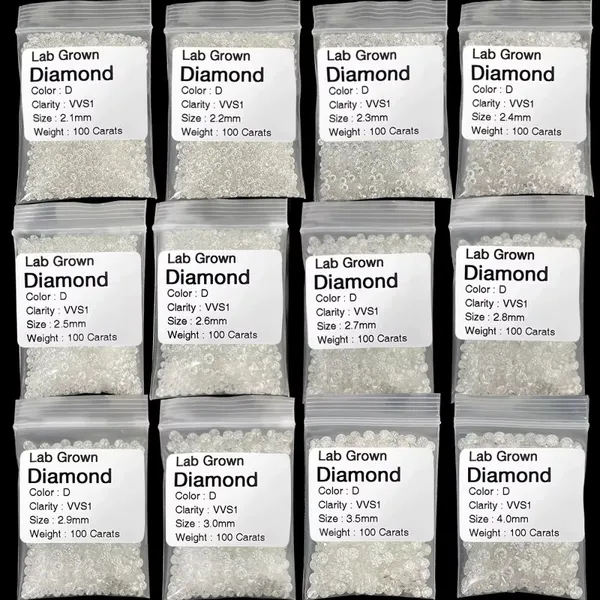 Read More
 -
Diamants de Laboratoire Melee en Gros : Lots Flexibles (2 à 100 Pièces) | Qualité Supérieure 0.9mm -
March 9, 2026Diamants de Laboratoire Melee en Gros : Lots Flexibles (2 à 100 Pièces) | Qualité Supérieure 0.9mm - 3.0mm HPHTRésumé Exécutif : L
Read More -
DEF VVS-VS Lab-Grown Melee Diamonds: 0.8mm – 3.0mm HPHT Full Cut Wholesale Loose Stones
March 9, 2026Welcome to the future of fine jewelry manufacturing. Our premium collection of DEF Color, VVS-VS Clarity, Lab-Grown Melee Diamonds represents the absolute highest standard in the wholesale diamond market. Ranging in meticulously calibrated sizes from 0.8mm to 3.0mm, these stones are engineered using the state-of-the-art HPHT (High Pressure High Temperature) method.Every single stone in our inventory features a Full Cut (57/58Read More

Contact Us
Recommended Products
-
 Vietnam Style 18K Gold Plated Jewelry, Traditional Bridal Necklace Earring Set for Ladies, Wholesale From 12 Pieces.US$ 9.3MOQ: 12 Pieces
 -
Brunei Style 24K Gold Plated Jewelry Set, High Quality Bridal Jewelry for African Wedding, Wholesale From 12 Pieces.US$ 9.3MOQ: 12 Pieces
-
Laos Fashion Gold Color Jewelry Set, Copper Material Necklace Earring Set for Party, Wholesale From 12 Sets.US$ 9.3MOQ: 12 Pieces
-
Myanmar Gold Plated Jewelry Set for Women, Exquisite Necklace Earring Ring Bracelet 4pcs, Wholesale From 12 Pieces.US$ 9.3MOQ: 12 Pieces
-
Cambodia Trendy 18K Gold Plated Jewelry, Southeast Asia Bridal Wedding Jewelry Set, Wholesale From 12 Sets.US$ 9.3MOQ: 12 Pieces
-
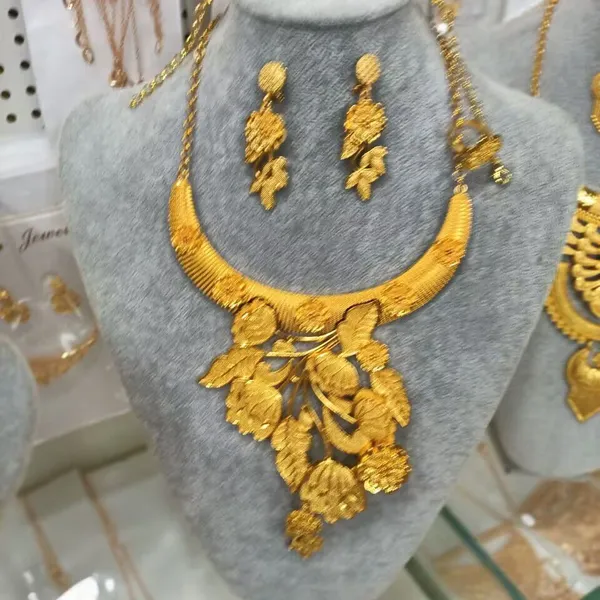
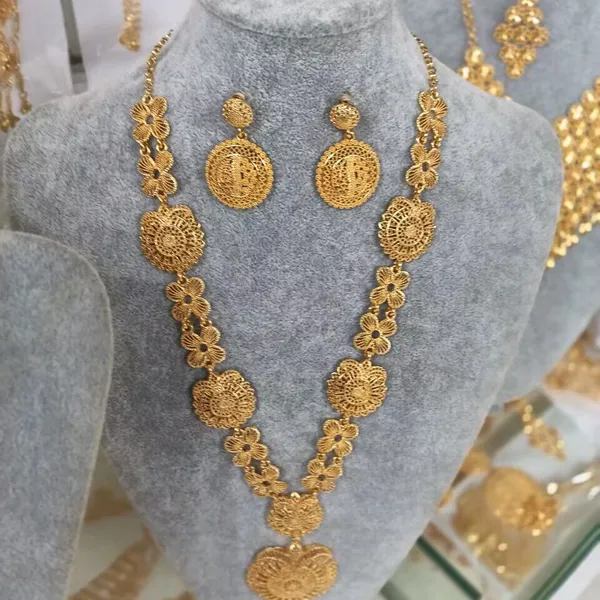
Singapore Luxury Gold Color Jewelry Set, Women's Wedding Necklace Earring Bracelet Set, Wholesale From 12 Pieces.US$ 9.3MOQ: 12 Pieces
-
Philippines Style Gold Plated Jewelry Set, Copper Base Bridal Necklace Earrings Set, Wholesale From 12 Sets.US$ 9.3MOQ: 12 Pieces
-
Indonesia Fashion Gold Jewelry Accessories, Flower Design Necklace Earrings Ring Bracelet, Wholesale From 12 Pieces.US$ 9.3MOQ: 12 Pieces
-
Malaysia Elegant 18K Gold Plated Jewelry Set, Bridal Wedding Necklace and Earring Set, Wholesale From 12 Sets.US$ 9.3MOQ: 12 Pieces
-
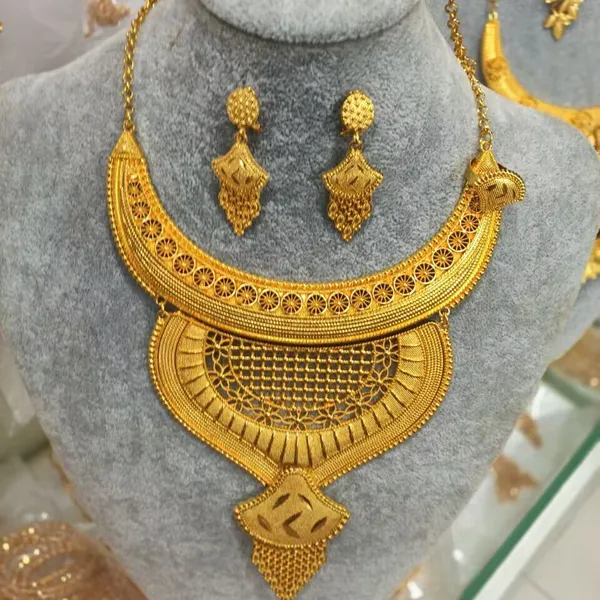
Vietnam Gold Plated Jewelry Set for Women, Sand Gold Color Necklace Bracelet Earrings Set, Wholesale From 12 Pieces.US$ 9.3MOQ: 12 Pieces
-
Thailand 24K Gold Color Jewelry Set, Traditional SE Asia Style Necklace Earrings Ring Set, Wholesale From 12 Sets.US$ 9.3MOQ: 12 Pieces
-
Turkey Style Gold Plated Jewelry Set, High Quality Necklace Earrings Ring Bracelet Set, Wholesale From 12 Sets.US$ 9.3MOQ: 12 Pieces
-
Riyadh Fashion 18K Gold Plated Jewelry, Women's Luxury Jewelry Set for African Wedding, Wholesale From 12 Pieces.US$ 9.3MOQ: 12 Pieces
-
Abu Dhabi Gold Color Jewelry Set, Traditional Bridal Necklace Earring Set for Wedding, Wholesale From 12 Sets.US$ 9.3MOQ: 12 Pieces
-
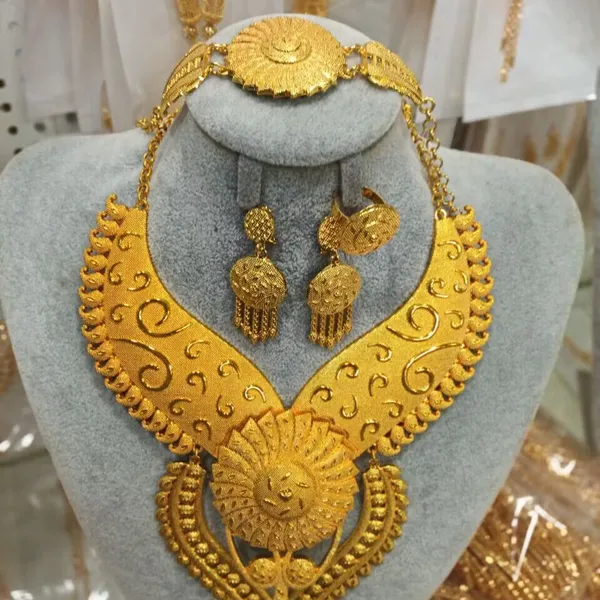
Dubai Gold Jewelry Set for Women, Flower Design Necklace Earrings Ring Bracelet Set, Wholesale From 12 Pieces.US$ 9.3MOQ: 12 Pieces
-
Middle East Luxury Gold Plated Jewelry Set, Copper Base Necklace Earring Set for Party, Wholesale From 12 Sets.US$ 9.3MOQ: 12 Pieces
-
Iraq Style 24K Gold Color Jewelry Set, Large African Wedding Jewelry for Women, Wholesale From 12 Pieces.US$ 9.3MOQ: 12 Pieces
-
Lebanon Fashion Gold Plated Jewelry Set, Bridal Necklace Earrings Bracelet Ring 4pcs, Wholesale From 12 Sets.US$ 9.3MOQ: 12 Pieces
-
Bahrain 18K Gold Plated Wedding Set, Exquisite Dubai Style Jewelry Set for Women, Wholesale From 12 Pieces.US$ 9MOQ: 12 Pieces
-
Jordan Trendy Gold Jewelry Set, Copper Material Necklace Earrings Ring Set for Bridal, Wholesale From 12 Sets.US$ 9MOQ: 12 Pieces